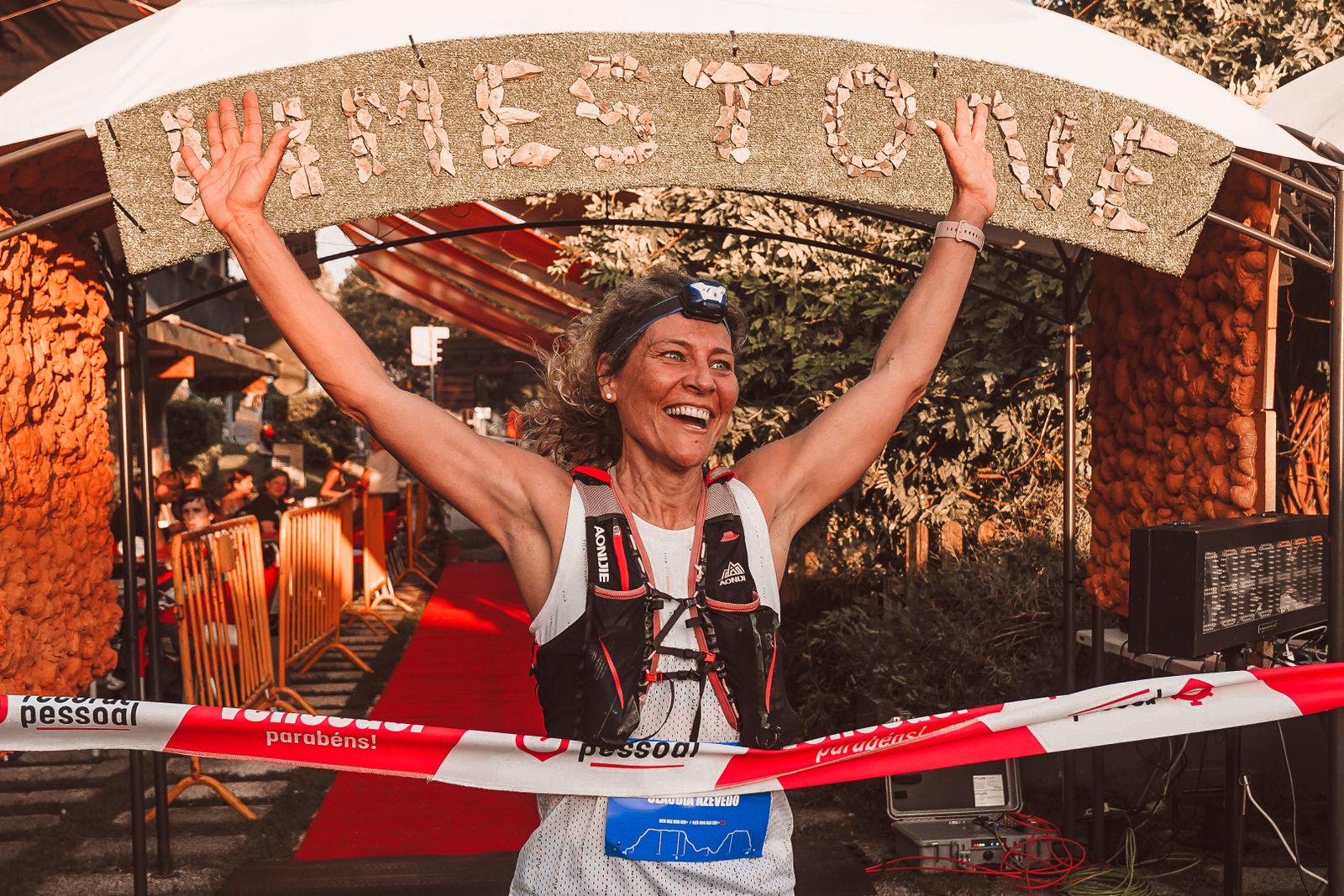
Can You Start Running at 50?
A Complete Beginner guide for Women
The bravest question in my inbox arrives weekly, in different handwriting but identical spirit: is it too late for me? Here's my answer, in writing, once and for all.
Yes. You can absolutely start running at 50 — or 55, or 61. And I don't say that as encouragement. I say it as physiology.
Every week a woman writes to me, already apologizing: for her age, for her fitness level, for daring to ask at all. She's watched runners glide past and quietly assumed the window closed on her somewhere around her thirties. I want to take that assumption apart, piece by piece, because it isn't just discouraging. It's factually wrong.
Here's what I know from decades of marathons, from my own midlife body, and from the research: the women I most admire at start lines began at 47, at 53, at 61. What changes when you start running at 50 isn't the possibility. It's the approach — and honestly, the midlife approach is better coaching than most twenty-five-year-olds ever get.
Let me show you exactly how to begin.
Table of Contents
- Is It Really Possible to Start Running at 50?
- What Actually Changes After 50
- The 7 Steps to Start Running at 50
- Your First Week: The Exact Plan
- The Mistakes That Derail Beginners
- The Bottom Line
Is It Really Possible to Start Running at 50?
Let's answer the question underneath the question. You're not really asking whether running is allowed after 50. You're asking whether your body can still adapt — whether there's any point.
There is, and here's why.
Your heart and lungs respond to training at every age. The aerobic system of a woman who starts at 55 adapts by the same mechanisms as anyone's: mitochondria multiply, capillaries grow, the engine builds. Your muscles answer resistance training in your sixties and seventies — the research on strength training in older adults is among the most optimistic literature in all of exercise science. Your bones respond to loading, which matters enormously for women in midlife.
“Too late” has never been a finding in any physiology study I've read. It was always a cultural message, never a clinical one.
What's more, women who start running at 50 bring advantages the twenty-five-year-olds don't have. You know how to keep promises to yourself — you've kept much harder ones. You're immune to the vanity metrics that burn younger runners out. You're not running away from something; you're running toward it, and that fuel doesn't evaporate at kilometre three.
(A necessary note: before starting any exercise program, especially if you have existing health conditions, talk to your doctor first. This is a guide, not medical advice — your clinician outranks any blog, including mine.)
What Actually Changes After 50
Being honest about the differences is what makes the plan work. Three things genuinely change, and every one has a solution.
Connective tissue adapts slower than your enthusiasm. Your heart and lungs get fitter within weeks — but tendons, ligaments, and joints need months. This mismatch is the single biggest cause of beginner injuries at any age, and midlife widens the gap. The fix: ramp up far more gently than feels necessary.
Recovery takes longer. Tissue repair slows, and if you're navigating perimenopause or menopause, disrupted sleep further delays adaptation. The fix: never run on consecutive days, and treat rest as part of the plan, not a break from it.
Muscle and bone need active defence. Declining estrogen accelerates loss of both. The fix — and this is the one nobody tells beginners: strength training isn't optional decoration on a running plan. It is the plan.
Notice that none of those three is “you're too old.” They're all “train differently.” That's the whole difference.
The 7 Steps to Start Running at 50
Here's the exact approach I'd coach you through if we were neighbours.
- Get Cleared, Then Get Started
One conversation with your doctor — especially if you have heart, joint, or bone concerns — and then stop researching and start moving. Perfectionism is fear wearing a productive outfit.
- Begin With Walk-Run Intervals, Not Running
This is the foundation. Do not attempt to “just run.” Start with one minute of gentle jogging, two minutes of walking, repeated ten times. Thirty minutes total. If the jogging feels almost silly-easy, you're doing it correctly.
- Run Slow Enough to Smile
Every step of your easy running should pass the talk test: you can speak in full sentences, not gasps. This is the niko niko or “smile pace” method, and it's the single most important thing on this list. If you can't chat, slow down. Then slow down again. Slow is not the compromise — slow is the method.
- Three Runs a Week — Never Back to Back
Tuesday, Thursday, Saturday. The rest days between are when your body actually builds the fitness. Rest isn't a break from training; it's the half of training where the construction happens.
- Add Two Strength Sessions
Twenty to thirty minutes, twice a week. Squats, hinges, push, pull, carry. Heavy enough that the last rep has an opinion. Your bones and muscles are counting on this more than they're counting on the running. Non-negotiable.
- Fuel and Hydrate Properly
Never run on empty — a small pre-run bite tells a midlife body it's safe to work. Protein at every meal supports the muscle you're building. As a chef, I promise this can be delicious rather than dutiful.
- Progress by 10%, Not by Ambition
Increase your running time by no more than about 10% per week, and hold every fourth week easier to let your body absorb the work. This patience is the difference between a runner and a formerly-injured beginner.
Your First Week: The Exact Plan
Here's week one, precisely as I'd write it for you. Every session begins with a five-minute brisk walk to warm up and ends with a few minutes of easy walking.
- Monday: Strength, 20 minutes (squats, wall push-ups, glute bridges, bird dogs)
- Tuesday: 10 × (1 min jog / 2 min walk) — 30 minutes total
- Wednesday: Walk 30 minutes, comfortable pace
- Thursday: 10 × (1 min jog / 2 min walk)
- Friday: Strength, 20 minutes
- Saturday: 10 × (1 min jog / 2 min walk)
- Sunday: Rest — properly
That's it. That's the whole first week when you start running at 50. No pace targets. No distance goals. No gadgets required — just shoes, a clock, and the talk test.
If a full minute of jogging is too much right now, do thirty seconds. If walking thirty minutes is your ceiling this month, walk thirty minutes and start jogging next month. Meeting your body where it is beats forcing it where it isn't.
The Mistakes That Derail Beginners
I've watched these end more midlife running dreams than any physical limit ever has.
Running too fast. By far the biggest. Beginners run their easy runs at moderately-hard effort, get exhausted, and conclude they're “not a runner.” You're not unfit — you're just running too fast.
Progressing too quickly. The first three weeks feel great, so you double the mileage — and your tendons file a formal complaint in week six.
Skipping strength training. It feels optional. It isn't, particularly for women in midlife protecting bone and muscle.
Skipping rest days. More is not better. Better is better, and better requires recovery.
Comparing yourself to anyone. Your pace is a fingerprint, not a scoreboard. The only fair competitor is the woman you were last season.
The Bottom Line
Can you start running at 50? Yes — and you may be better equipped for it than you've ever been.
Your body responds to training at every age. What changes is the approach: gentler ramps, real recovery, strength work from day one, and the patience to run slow enough to smile. Follow that and you won't just become a runner. You'll become a durable one, which is the only kind that lasts.
You're not too late. You're right on time — your time.
Midlife isn't a crisis — it's a comeback.
We're not finished yet.
Start Running at 50 •