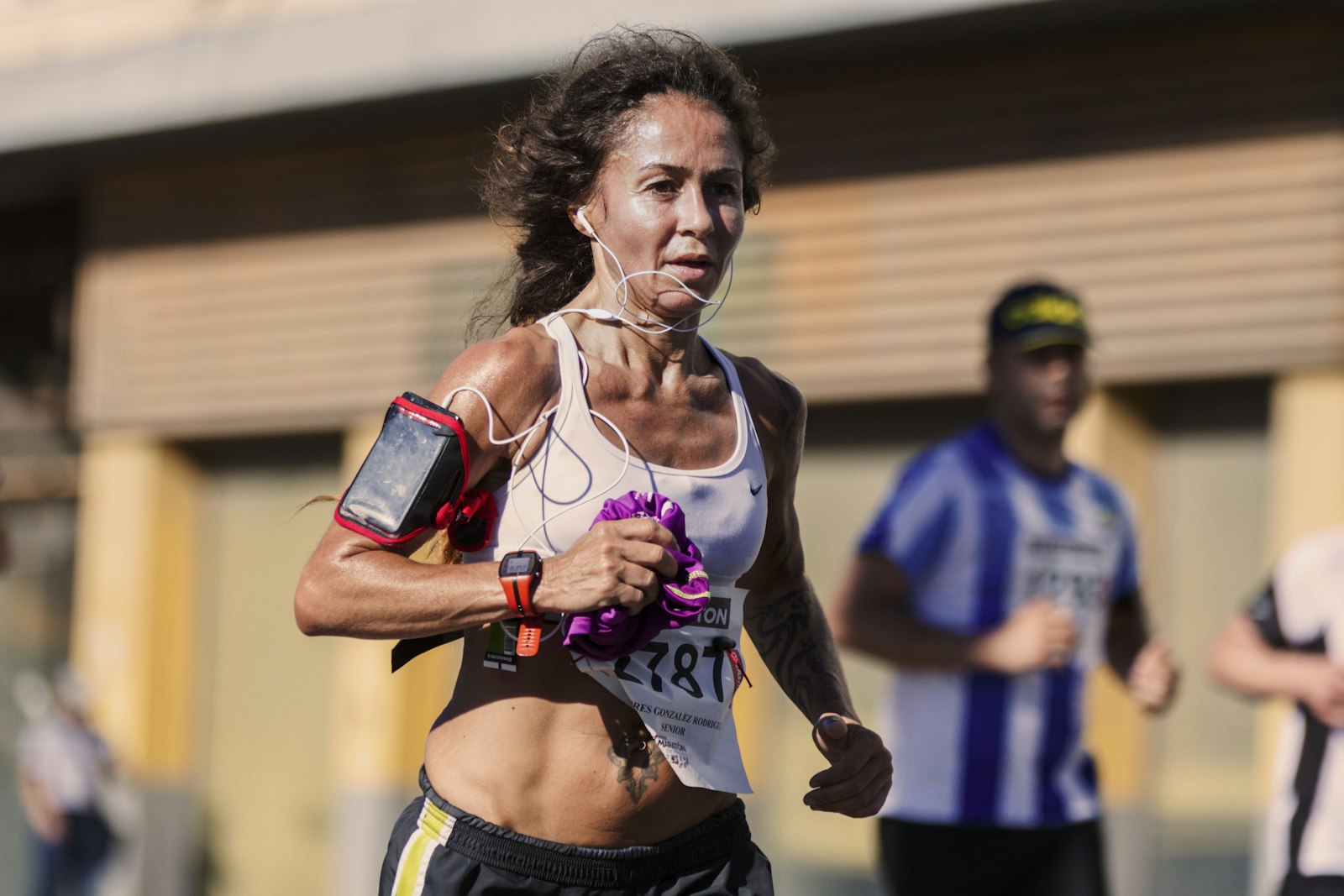
Entering Menopause as a Runner: 6 Freedoms That Change Everything
As a chef, a marathoner, and a woman who just crossed into menopause without HRT, I've been waiting to write this one. Here's the truth nobody told me: entering menopause as a runner isn't the finish line of your running life. For many of us, it's the starting gun.
Some days I still can't quite believe I'm here. Twelve consecutive months without a period — the medical definition of menopause — which means that as of this year, I've officially crossed from perimenopause into a brand-new chapter. No HRT, no shortcuts, just strength training, slow miles, real food, and showing up on the days I didn't want to.
And here's what surprised me most: entering menopause as a runner feels like standing at a start line, not a finish line.
The culture handed us a story about menopause — a story of ending, of decline, of fading quietly into the background. As a runner, I'm here to formally return that story to sender. Because when you look at this chapter through the lens of an athlete, something unexpected happens: you stop counting the losses and start counting the freedoms.
Let me explain what menopause actually is, then walk you through the six freedoms that might just change your running game for the better — and the challenges I'll be honest about too.
Table of Contents
- What Menopause Really Is (The Vocabulary Nobody Taught Us)
- Why Entering Menopause as a Runner Changes the Game
- The 6 Freedoms Nobody Talks About
- What About the Challenges?
- How to Run Into This Chapter Strong
- The Bottom Line
What Menopause Really Is: The Vocabulary Nobody Taught Us
Let's clear up the language first, because most of us were never properly taught it — and understanding it is the key to understanding why this chapter can feel like freedom.
Perimenopause is the transition — the years (often four to eight of them) leading up to menopause, when your hormones, especially estrogen, swing unpredictably. This is the storm phase: the hot flashes, the disrupted sleep, the cycle that becomes a stranger. For runners, it's the hardest stretch, because the hormonal chaos collides with training in ways nobody warns you about.
Menopause itself is not a phase — it's a single point in time. It's officially diagnosed when you've gone twelve consecutive months without a menstrual period. One day, quietly, you cross it. It's a milestone, not a monster.
Postmenopause is everything after — the rest of your life, lived at a new, low, and crucially stable level of estrogen.
That word — stable — is the whole secret of why entering menopause as a runner can feel like liberation. After years of perimenopause's wild hormonal swings, your body settles into a steady state. And for a runner, steady changes absolutely everything.
Why Entering Menopause as a Runner Changes the Game
For most of our running lives, we've trained around something — the monthly cycle, with its predictable interruptions to energy, comfort, and planning. Even the most disciplined among us have quietly organized our biggest efforts around the calendar our bodies imposed. We planned long runs around the heavy days. We crossed our fingers over race-day timing. We pushed through workouts that felt inexplicably harder one week out of every four.
Menopause removes that calendar entirely.
I don't say this to dismiss the real challenges ahead — there are many, and I'll be honest about every one of them in the blogs to come. But right now, at the doorway of this chapter, I want to name what almost nobody names: the freedoms. Because a runner entering menopause is a runner who just got handed a fistful of them.
Think of it this way. For decades, your running existed inside a monthly rhythm you didn't choose. Now, for the first time since you were a teenager, your training calendar answers to you and you alone. That's not a small shift. For an athlete, it's a profound one.
The 6 Freedoms Nobody Talks About
Here are the six freedoms I've discovered at the threshold of this chapter — the ones the "menopause as decline" story completely ignores.
1. Freedom to Plan Training Around Your Goals, Not Your Cycle
For decades, the monthly cycle shaped training whether we admitted it or not. Certain weeks brought energy; others brought sluggishness, heavy legs, and workouts that felt like running through wet cement. In postmenopause, that hormonal tide goes quiet. You can build a training block around your race, your life, and your goals — not around which week of the month it is. That's a kind of planning freedom most runners have never known in their entire adult lives.
2. Freedom to Schedule Races Any Time of the Month
Every woman who's raced knows the private math: please don't let race day land on the worst day. We've all crossed our fingers over a start line, hoping the timing cooperated, packing supplies just in case. That anxiety simply dissolves in postmenopause. You can register for any race, on any date, and know your body won't sabotage the calendar. Sign up for the spring marathon, the summer ultra, the autumn half — the date is just a date now, and every date is equally yours.
3. Freedom From Tampons, Pads, and Race-Day Logistics
Let's be honest about the practical stuff, because runners live in the practical. No more packing supplies for a long run. No more mid-race worries about leaks or changes. No more planning what to wear around the calendar. For a sport that already demands so much logistics — fuel, hydration, gear, pacing — losing an entire category of it is a genuine, daily relief that adds up over every single run.
4. Freedom From Cramps, Cycle Pain, and Monthly Sluggishness
The cramps, the bloating, the days when your body felt like it was working against you — that monthly toll on training simply ends. Many women describe a new evenness to their energy in postmenopause, once the swings settle. The workouts stop having a hidden difficulty setting that changed with the week. What you're left with is a more predictable body, and predictability is a gift to any athlete trying to train consistently.
5. Freedom From the Monthly Cravings
The cyclical cravings that could derail the best nutrition intentions — the ones that arrived like clockwork and left you negotiating with the pantry — lose their monthly grip. As a chef, I found this one quietly liberating: fueling becomes a steadier, more deliberate practice when it's not periodically hijacked by hormones. It's easier to eat with intention when your appetite isn't riding a monthly rollercoaster.
6. Freedom From Worrying About Pregnancy
For women who spent decades managing contraception, this freedom is real and rarely spoken aloud. One less thing to plan, track, or worry about — in training, in racing, and in life. It's a quiet mental load that simply lifts.
Put those six freedoms together and a picture emerges that the "menopause as decline" story completely misses: a runner who is finally, fully in the driver's seat of her own calendar. Steady energy. Open scheduling. Fewer logistics. Fewer interruptions. For an athlete, that's not an ending. That's a brand-new runway with decades of start lines on it.
What About the Challenges?
I promised you honesty, so here it is: this chapter has real challenges too, and I won't pretend otherwise.
The decline in estrogen affects bone density, muscle maintenance, recovery speed, and cardiovascular health — and these matter enormously for runners. Bone loss accelerates in the years around menopause, which makes strength training and impact more important than ever. Muscle becomes harder to maintain, so protein and resistance work move from "nice to have" to non-negotiable. Recovery slows, which means the training week that worked at thirty-five needs rethinking at fifty. And cardiovascular risk rises as estrogen's protective effect fades — one more reason those easy aerobic miles matter.
Some symptoms don't vanish the moment you cross the line, either. The transition to full hormonal stability can take time, and everyone's timeline is different.
But here's my promise to you: I'm going to walk through every one of those challenges with you in the blogs, months, and years to come. I'm living this in real time — one month into menopause as I write this — and I'll share what I learn as I learn it: what the research says, what works in my own training, and what I wish someone had told me sooner. None of this, ever, is medical advice — your doctor outranks any blog, including mine. That's a promise too.
Today, at the threshold, I wanted to start where almost no one starts: with the freedoms. Because you deserve to enter this chapter seeing the whole picture — not just the warnings.
How to Run Into This Chapter Strong
If you're approaching or entering menopause as a runner, here's where I'd point you first — the foundation everything else builds on:
- Make strength training non-negotiable. Two sessions a week. Your bones and muscles are counting on it more than ever now — it's your single best defense against the changes ahead.
- Run slow enough to smile. Easy, conversational miles build the engine and protect a midlife body. Speed comes from a few strong finishes, not daily grinding.
- Fuel with intention. Protein at every meal, real food, steady blood sugar. As a chef, I promise it can be delicious rather than dutiful.
- Guard your sleep and recovery like they're training. Because they are — this is where fitness actually gets built, especially now.
- Talk to your doctor. Especially about bone density, cardiovascular health, and any symptoms. Know your own numbers rather than guessing.
Each of these deserves its own deep dive, and I'll be linking detailed guides here as I publish them — consider this pillar your home base for the whole journey.
The Bottom Line
Menopause is not the end of your running life. For many of us, entering menopause as a runner is the beginning of the freest chapter we've ever run.
The monthly calendar that quietly shaped decades of training? Quiet now. The race-day timing anxiety? Gone. The cyclical cravings, cramps, and sluggishness? Fading into a new evenness. What's left is a woman, her goals, and an open calendar — with decades of start lines ahead of her.
I crossed this line the way I plan to cross every one that's left: on my own two feet. And I'd love your company for the journey — the freedoms and the challenges, all of it, shared honestly, one chapter at a time.
Midlife isn't a crisis — it's a comeback.
We're not finished yet.